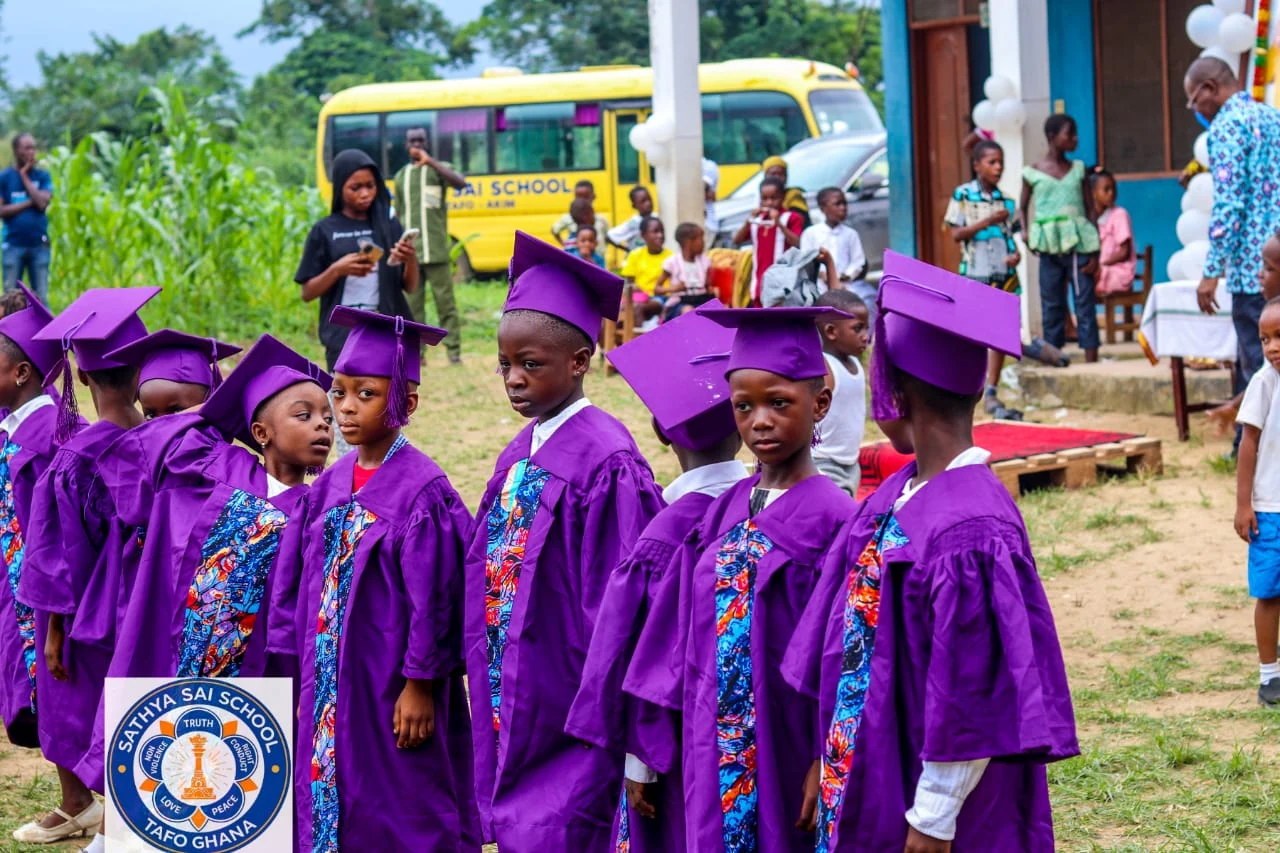
Inside the school
The root nobody sees
A school in Old Tafo that began with eight pupils in one classroom, held on through its hardest years, and now teaches 288 children from six farming communities. Every pupil in its first exam class passed, a result its leaders say no school in the district has matched. Its former pupils come back to teach, and the people who carry it say they do it for the children and for Swami.
Help this school growEight pupils, and a place to grow
The school opened in Old Tafo in September 2009 with eight pupils sharing one classroom. Its first principal recalled that the number reached 50 within a year. Today its stages run from nursery and kindergarten through primary and junior high; on 27 May 2026 the school reported 288 learners and 17 teachers.
Children come from six communities along the road between Accra and Kumasi, including Old Tafo, New Tafo, Kukurantumi, Osiem and Bunsu. Most families are farmers who earn very little. In May 2026, two school buses collected about 150 children each day, while those living within about a kilometre walked.
Families give a small contribution each term, and the January 2026 newsletter described the school as “virtually free”.
Values become everyday habits
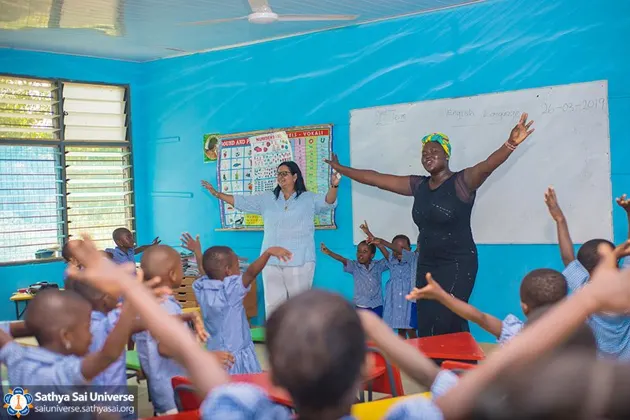
The day begins with assembly, silent devotion and a values talk. Silent sitting, storytelling and songs continue in classrooms alongside mathematics, English and science. Teachers help children practise truth, right conduct, peace, love and non-violence in ordinary situations.
Writing in July 2025, senior teacher Esther Boateng said the values lessons, taught through storytelling and songs, have helped her cultivate empathy; teacher Yvonne Twumwaa wrote that silent sitting helps pupils cultivate mindfulness and inner peace. Asked in May 2026 what sets the school apart, the principal spoke first of empathy, and of a parent who told the PTA about the new habits her daughter had taken up at home. Families, the school’s leaders say, bring their children “to acquire the Sathya Sai values”.
Homework is taken seriously. Most parents cannot help with it themselves, so families find someone who can, and children do not come to school with it undone.
Training has reached beyond the school. Trainers from the African Institute of Sathya Sai Education visited in 2014 and 2018, and the school invited and fed teachers from other Tafo schools so that about 100 teachers could learn together. A later training session took place on 26 March 2019. In January 2024, a values session brought together 14 teachers, 60 parents and 115 pupils.
The people behind the school
Why they stay
The school has been carried through hard years by people who say they do it for the children and for Swami. Their words come from the conversation on 27 May 2026, a filmed interview and the school newsletters.
George Bosompem
Head of school management · President, Sathya Sai International Organization of Ghana
“It has never been easy, but we know that no condition is permanent.”
Conversation, 27 May 2026.
George has served in the Sathya Sai Organization in Ghana since 1993. In the May 2026 conversation, he recalled leading the group that acquired the school’s land in 2003 and staying three days in the forest to secure it, the youngest among people his father’s age. The land is registered in the school’s name: “Sathya Sai is the founder,” he says. Through the school’s hardest years, 2020 to 2022, he kept it open.
In a filmed interview, George tells how he came to Swami. He first heard of Sathya Sai Baba in the early 1980s and read about him for about ten years. In 1993, at the Sai temple in Ghana, he became convinced that this was the master he had to follow. In 1997 he travelled to Puttaparthi for the first youth conference there; Swami called him into the interview room with ten companions and gave him a ring, which he keeps on his altar to this day. “I don’t know where the energy comes from,” he says of the work since. “The energy comes.”
Asked about the hardest part of the work, he described a tree: people see the shining flowers, the leaves, the branches and the stem, but no one sees what forces its way through rocks and sand to feed it. Since 2003, he says, he has never slept more than four hours a night. When he goes to town, children call him “grandpa”, and three women of the organization, all in their eighties, tell him they are praying for him: even if the children have to learn under the trees, do not stop running the school.
Who is Sai Baba to George?
“Because I had one on one with Swami… the conclusion of Swami’s thought was that George, you should never forget me… That gives me the extra energy. And I know it is coming from Swami.”
Conversation, 27 May 2026. George recalling a personal interview with Sathya Sai Baba, and the inspiration he draws from it.Gilbert Prakash Djirackor
Principal · since 2023
“I don’t know how many years more I have to live, but let me do the rest.”
Conversation, 27 May 2026.
Gilbert has been part of the Sathya Sai Organization for about 45 years, beginning in Nigeria, where he helped start it. In 2023 George asked him to come back to Ghana and lead a school going through a hard time. There were about 73 pupils then; by May 2026 there were 288. “That is my joy,” he says. He calls his work at the school seva, selfless service.
Writing in the July 2025 newsletter, he described those first months as turbulent, with pupil numbers down by more than half and teachers losing heart. “Swami tests our resolve and commitment with these challenges,” he wrote, “and there was a clear need to turn to Him for direction, guidance and purpose.” With that, he said, the school was back on track “as a beacon of light for other schools in the district”.
He describes a team whose aims reach beyond academic results: discipline, service and integrity. Much of the sacrifice, he says, happens quietly, and even a small change in a child’s life keeps the team committed to Swami’s work. With Swami’s grace, he says, the burden is never more than they can cope with.
Who is Sai Baba to Gilbert?
“Our focus remains on ensuring that every child feels supported, valued, and hopeful, as Swami would want us to do.”
Conversation, 27 May 2026.Albert Sogah
Teacher
“I have become an effective and compassionate educator.”
School newsletter, July 2025.
Albert describes how values-based teaching and silent sitting changed his own patience and compassion, as well as the way he teaches.
Mary Asante
Parent · July 2025
“I’ve seen a remarkable improvement in my child’s focus, discipline, and sense of responsibility since joining Sathya Sai School and introduced to EHV.”
School newsletter, July 2025. EHV means Education in Human Values.
Mary writes about the change she has seen in her son since he joined the school and began the human values lessons, including in his schoolwork.
Petra Ansah
Basic 6 pupil · July 2025
“EHV teaches me to be kind and patient, which helps me understand my lessons better.”
School newsletter, July 2025. EHV means Education in Human Values.
Petra writes about being more focused in class and feeling confident when she does well.
Belinda Serwaa
Former pupil
“I would forever remember and acknowledge the natural gift I have been given at the Sathya Sai School in terms of moral and academic enhancement.”
School newsletter, October 2024.
After nursery through Grade 9 at the school, Belinda carried its values into senior high and described taking on leadership roles.
George’s and Gilbert’s words come from a recorded conversation with the Schools Committee on 27 May 2026 and a filmed interview, lightly edited for readability. Sri Sathya Sai Baba, whom they call Swami, was an Indian spiritual teacher whose message of love and service inspired people around the world. His teachings centre on five human values (truth, right conduct, peace, love and non-violence), and every Sathya Sai school is built on them. These individual reflections do not imply that every pupil or teacher shares the same belief. Read our story
A record that still stands, and pupils who come back
In 2021 the school entered its first class for the national Basic Education Certificate Examination (BECE): 12 pupils, and all 12 passed. School leaders said in May 2026 that the result topped every school in their district of 97 schools, that no school had matched it since, and that the chief congratulated the school in person. Every pupil in that cohort gained admission to a government senior high school under the Scholarship Scheme.
Other recognition followed. Invited as the twelfth school to a local quiz competition and expected to go out early, the school reached the final with pupils a year younger than its rivals’ and came second; it won the next year and, school leaders said in May 2026, had held the trophy for five years. They also said it was named the district’s well-disciplined school in 2022, 2023 and 2024. On 30 June 2024 it won Category A in the Zone 9 Africa Schools art competition, and it received accreditation from the Sri Sathya Sai International Organization at a conference in Nairobi held from 28 June to 1 July 2024.
Learning reaches beyond examination results. Thirty pupils and three teachers visited local sculpture makers in March 2024. Football with Quality International School later that year built friendships; pupils earned trophies and certificates at the October 2025 inter-basic-school festival, which included football, sprinting, volleyball and high jump.
Former pupils are returning to give back. By May 2026, school leaders reported three alumni teaching at the school and another who had taught for a year before university. Kwabena Katalee, writing in October 2024, credited the school’s early guidance with the leadership roles he took on in senior high.
A record that still stands, and pupils who come back
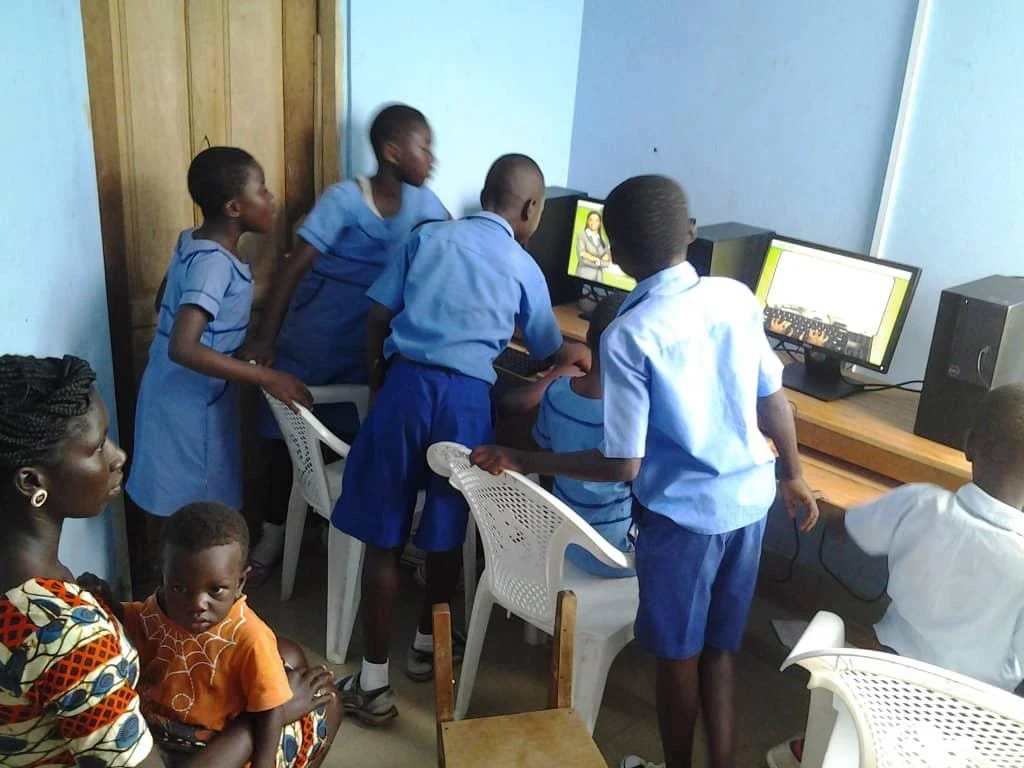
Learning together in the computer classroom. School archive, undated.
Source: Sri Sathya Sai School of Ghana archive
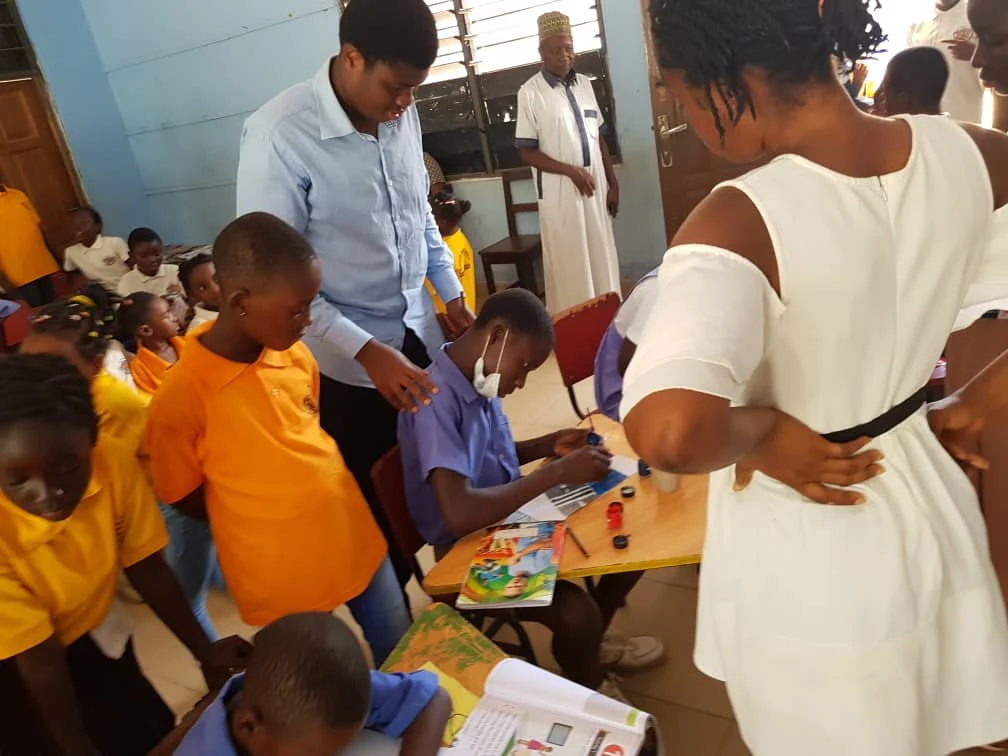
Making art together. School archive, undated.
Source: Sri Sathya Sai School of Ghana archive
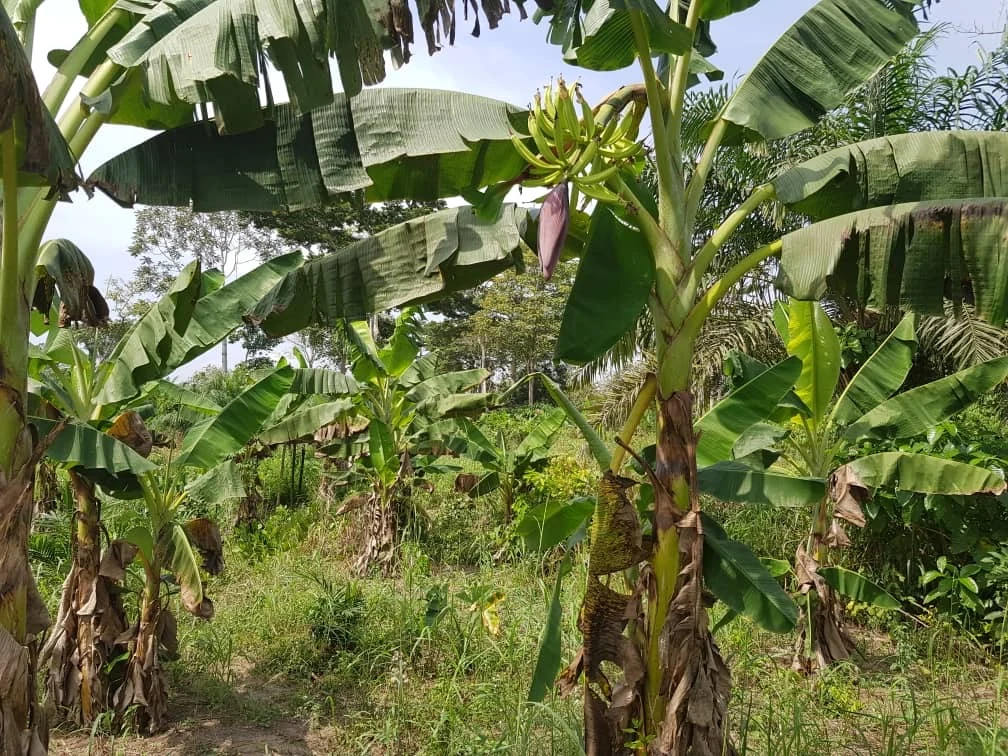
The School Farm pictured in the January 2026 newsletter, alongside its report of bananas and plantains supplementing meals.
Source: Sri Sathya Sai School of Ghana archive
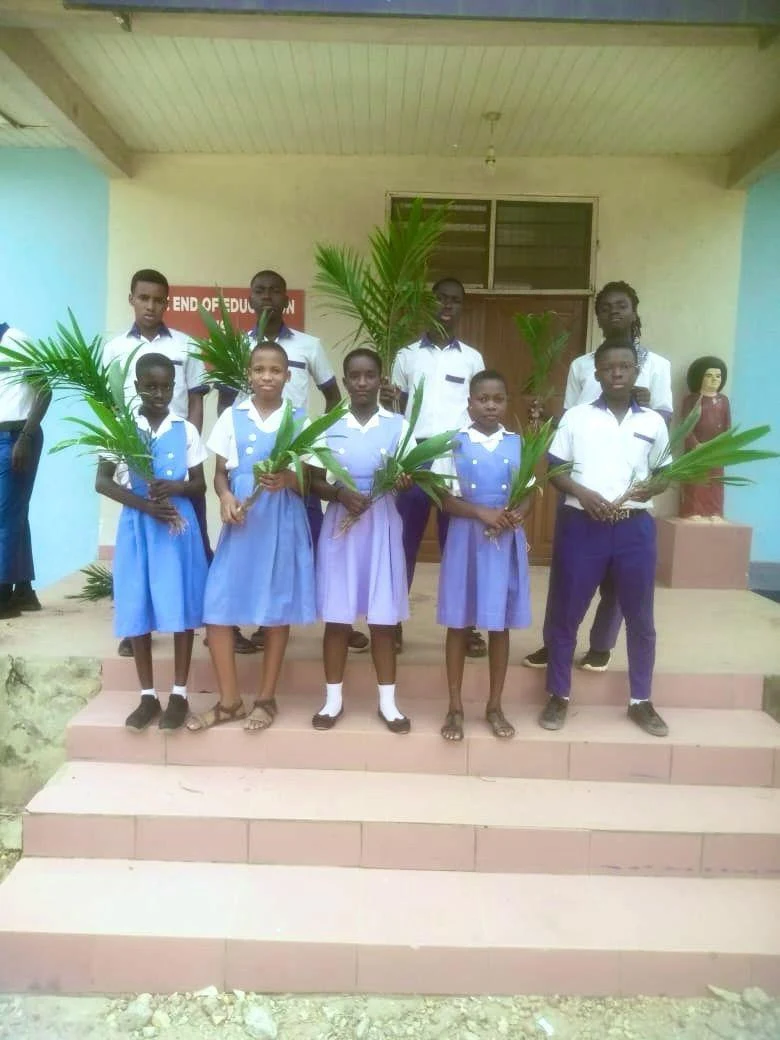
Young palms in pupils’ hands. School archive, undated.
Source: Sri Sathya Sai School of Ghana archive
No child left to the streets
When the principal arrived in 2023, the school had about 73 pupils. By May 2026 it had 288. School leaders measure success in the children they hold on to as much as in results.
In May 2026, George Bosompem told of a very young child who had stopped coming to school when the person caring for him fell ill. When the school heard, staff went for him, gave him the books he needed and brought him back, and some of them have taken him on as their own child. He also spoke of an older boy left without care, whom the school supported until he went on to senior high.
Teachers stay for similar reasons. School leaders told of a university-graduate teacher who chose to return full-time, and who recently accepted a better-paid post elsewhere only part-time so that he would not have to leave. As one of the leaders put it: “That’s the magic of Swami. The peace of mind that they get here.”
Culture and care beyond the classroom
Traditional Day in July 2025 brought dress, drumming, dance and drama into school life. Graduation that August brought children, families and elders from the Chief’s Palace together; pupils received certificates, stationery, bags and uniforms.
Parents are part of the work: 120 attended the September 2025 parent–teacher meeting. In November, the school community helped clean Tafo hospital and supplied soap, detergents, bedding and bottled water, continuing a service visit from the previous year. Values, Sports, Drama and Eco clubs give children further ways to create, work together and serve.
Learning from the land, growing food for meals
On 3 May 2024, 70 pupils and five teachers visited a field where farmers were planting crops. Their values lesson was about hope: sowing something today and caring for what it may become. This educational visit was separate from the school’s own farming work.
The school’s “grow what you eat” approach has a practical place in daily life. By January 2026, its farm was producing bananas and plantains to supplement meals and reduce food bought at market. In May 2026, school leaders said plantain or banana was harvested almost every other day and fried for the children.
The October 2024 newsletter also reported palm seedlings planted for future sustainability and a cassava food factory started with donors’ help. By May 2026, leaders described 20 acres of two-year-old palms with maize, plantain and banana growing between the rows, and expected the first palm harvest in about four years. The hope is that the land will one day help feed and sustain the school; that is a long-term undertaking.
Learning from the land, growing food for meals
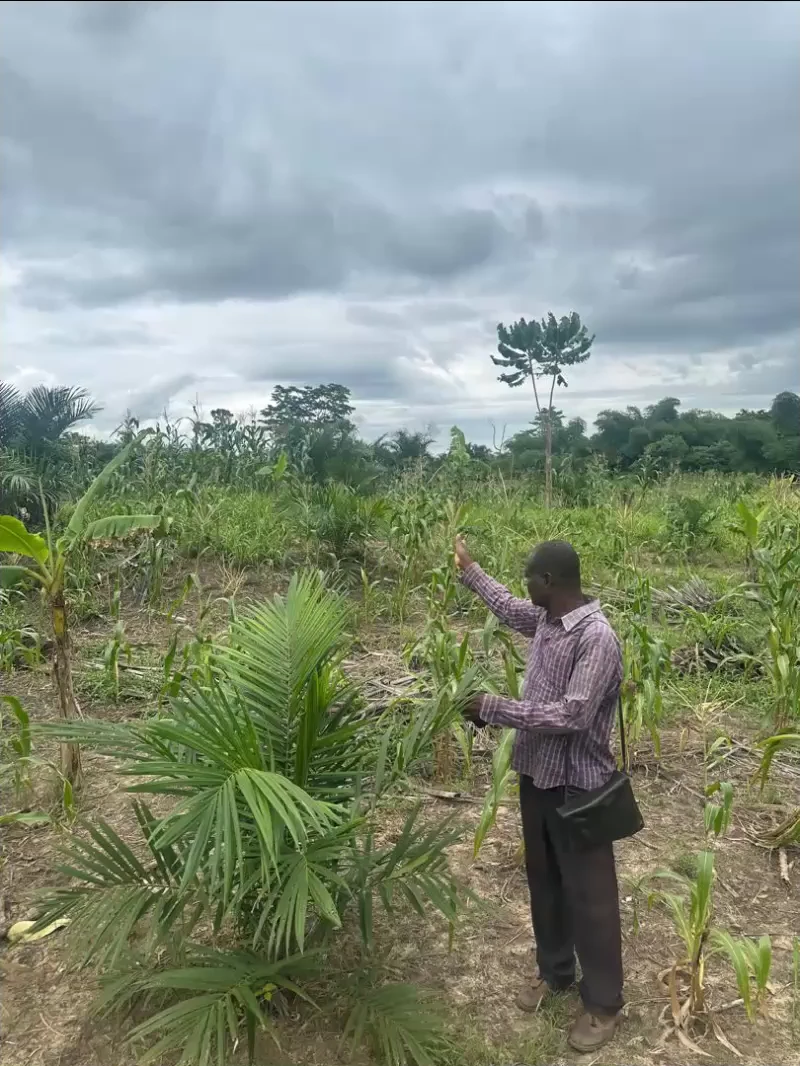
A young palm among food crops on the school plot. Photograph shared by the school in May 2026.
Source: Sri Sathya Sai School of Ghana · May 2026
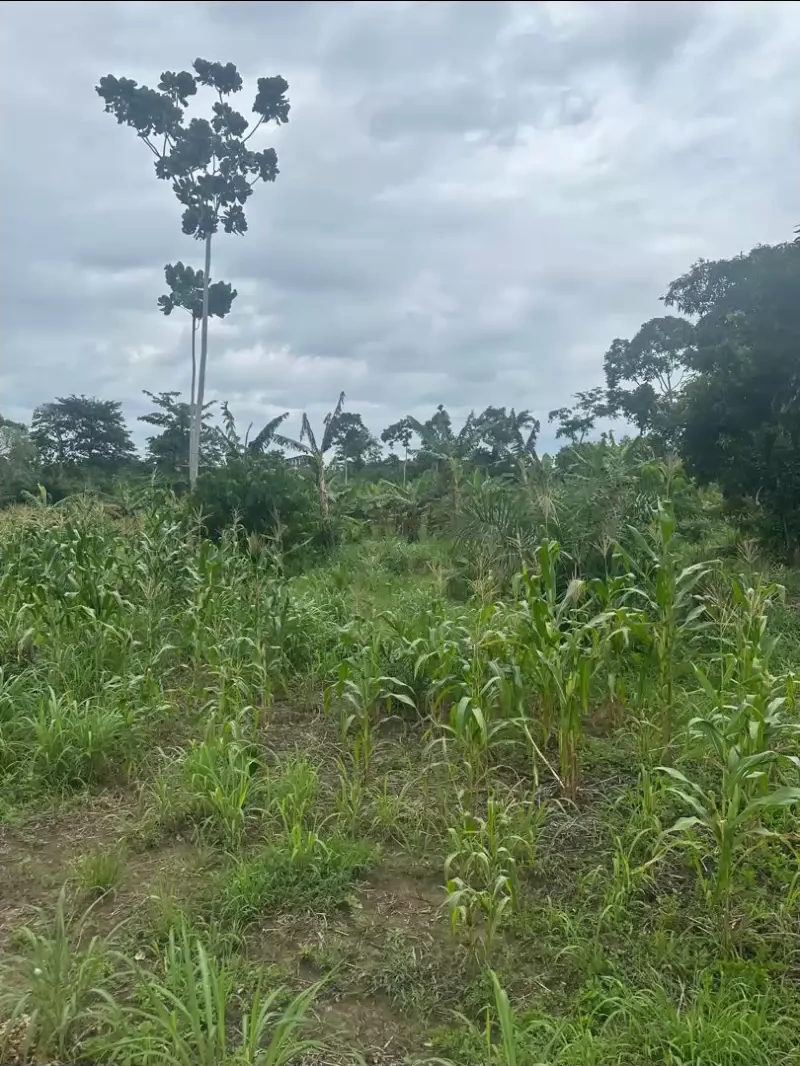
Palms and food crops growing together. Photograph shared by the school in May 2026.
Source: Sri Sathya Sai School of Ghana · May 2026
What support has helped change
Support has made room for learning. The October 2024 newsletter thanked donors for renovations and additional classrooms. The January 2026 report gives a clearer dated picture: two classrooms completed in 2024, with three more at 70% completion during 2025. In May 2026, school leaders said the ground floor was finished in 2024 with supporters’ help and the three upper classrooms were added in 2025 from donated funds.
The archive film shows a building while work was underway. A photograph and a walkthrough the school shared in October 2026 show the blue block with a roof, doors, balcony rails and classroom interiors. Together they show how far the work has come.
What support has helped change
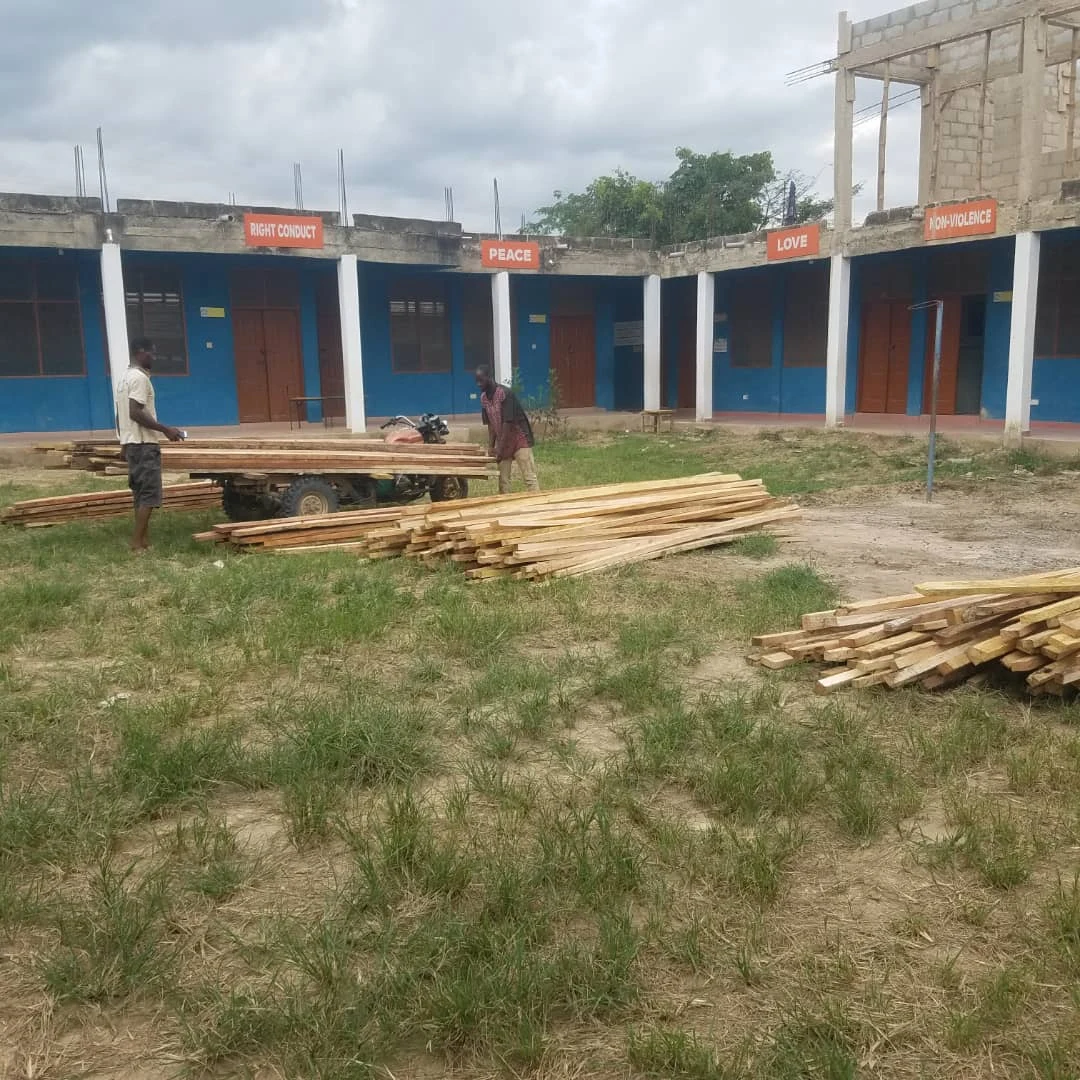
An earlier view of construction.
Source: Sri Sathya Sai School of Ghana archive
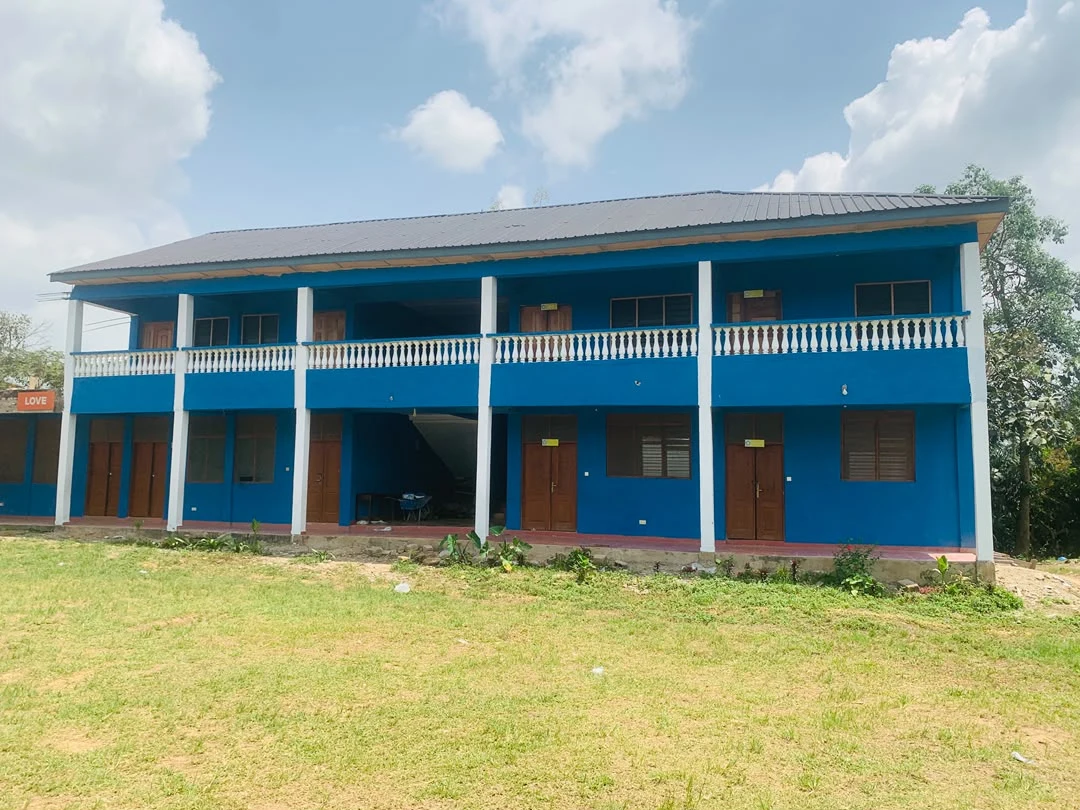
The school building, in a photograph shared by the school in October 2026.
Source: Sri Sathya Sai School of Ghana archive
Step inside the building
A walkthrough filmed by the school brings the change closer: a view around the outside, along the corridor and into rooms with desks and chairs. It gives supporters a direct look at the spaces taking shape for the school.
Help the next part of Ghana’s story
In May 2026 the school named a reliable bus as a priority. A minibus has since been provided.
Safe play came second. The old outdoor play equipment was retired as unsafe soon after the principal arrived in 2023, and in May 2026 the children still had nowhere to play at break. A playing field was being levelled, with goalposts still to come.
Ongoing support helps sustain teaching, meals and access to school while the community works towards greater self-reliance. The farm can contribute food, but the palm project is a long-term undertaking, not a replacement for today’s support.
If you would like to help Ghana, ask the Schools Committee about current play, classroom, meal or farming priorities. They can confirm what is needed now and how your contribution can help.